A cleaning robot sent into a chemical plant, mine, or damaged factory could keep people away from dust, heat, fumes, and unstable floors. The machine still needs a clear task, the right sensors, and a person who can stop it when the site changes.
Quick read
- Remote robots can handle inspection, debris movement, washing, and surface work.
- Cameras alone can't tell an operator what gas, heat, or loose material is present.
- The hard part is safe recovery when the robot loses contact, traction, or power.
Where robots can help
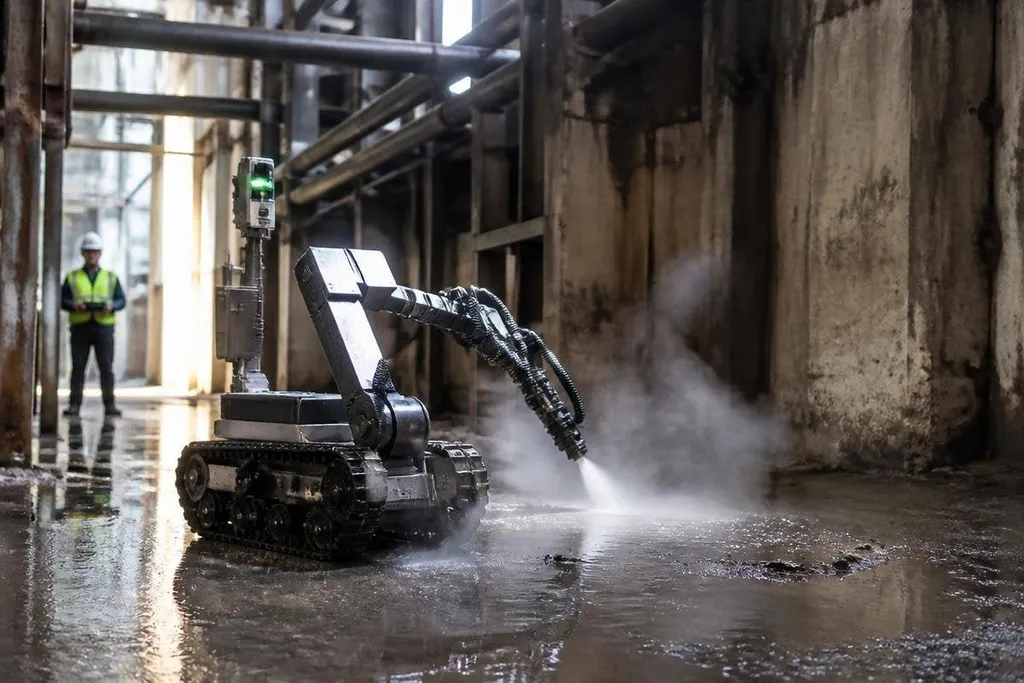
Industrial cleaning covers more than sweeping a floor. A tracked robot could move loose debris, spray a surface, or carry a camera through a narrow passage.
A robotic arm could hold a tool away from a worker while the operator controls each movement from a safer room.
The task must stay narrow. “Clean the room” gives a robot too little detail. “Remove loose material from this marked area, keep clear of the pipe, and stop if the gas reading changes” gives the control system limits it can check.
That matters because dangerous sites rarely stay still. Water can change traction, dust can block a sensor, and a fallen panel can close the route that the robot used a minute earlier.
Sensors decide what the robot knows
A camera shows visible detail, but it can't measure every risk. LiDAR measures distance with laser pulses, so the robot can map walls, equipment, and gaps. A thermal camera can show hot surfaces that look normal in an ordinary image.
Gas sensors add another layer. They can warn about a change in the air, but the reading still needs context: the sensor type, its range, its response time, and the point where the robot took the sample all matter.
The robot also needs force sensing at its arm or tool. That lets the system detect contact instead of pushing harder when a brush, valve, or piece of debris resists movement. A stopped tool is easier to inspect than a damaged pipe.
A contaminated site adds a hard test: can an operator stop the robot before its tool damages a pipe or spreads material? A Robot24 report can put that question beside the machine’s sensors, control link, and field test. That leads to the next issue: remote control.
Remote control beats blind autonomy
A robot may handle a repeated route on its own, but people should keep control of unusual actions. Remote operation lets an operator stop the motors, change the route, or inspect a live camera feed when the plan no longer fits the site.
The connection itself becomes part of the safety plan. A weak radio link can delay commands, while smoke, steel walls, and underground spaces can block signals. The robot needs a safe response to lost contact, such as stopping movement and holding its tool in a known position.
Autonomy still has a place. It can keep a robot on a mapped route, hold a steady spray distance, or return to a marked safe point. Those jobs are easier to check than a system making broad decisions inside an unknown building.
I’d fund better sensing and recovery controls before giving a cleaning robot more independent tasks.
The limits that decide the job
A machine built for a flat factory floor may fail on stairs, rubble, standing water, or thick dust. Wheels can lose traction. Tracks can damage weak flooring. An arm may reach the target but lack the force or grip needed to move it.
Cleaning can also spread the hazard. A high-pressure spray may move contamination into a drain or push dust into another work area. The plan must cover collection, waste handling, decontamination, and the route back out.
Maintenance brings another risk. Sensors need cleaning, batteries need charging, and sealed housings need inspection after work in water or chemicals. A robot that enters a site but cannot be cleaned safely has only moved the problem elsewhere.
Before a robot enters the site
Use this check before choosing a machine:
- Name the task: Set the exact action, tool, work area, and stop points.
- Map the hazards: Record heat, gas, water, dust, radiation, loose structures, and blocked routes.
- Check the robot: Match its wheels or tracks, tool, battery, sensors, and IP rating to the site.
- Plan lost contact: Decide what happens when the radio link, camera, or sensor feed fails.
- Set the human role: Give one trained operator authority to stop the robot and call people back.
- Test the exit: Confirm the robot can return, be cleaned, and be checked without exposing staff.
The best early jobs are those with a fixed area, a repeatable motion, and a clear stop rule. Cleaning robots will earn wider use when operators can show not only that the machine finished the task, but also what it sensed, where it stopped, and how it came home.